EU Foreign Subsidies Regime

Emerging trends shaping deals in 2026
The EU’s Foreign Subsidies Regulation (the FSR), which came into force in January 2023, is intended to address distortions in the EU internal market caused by foreign subsidies. 

It introduced a mandatory, suspensory regime for M&A (including joint venture) transactions and public tenders above certain financial thresholds.

This briefing explores European Commission (EC) decisional practice under the FSR to date, mainly focusing on the M&A aspects of the regime. It also examines the EC’s newly published guidelines and provides an outlook for companies in 2026. For further background on the FSR, see our previous client briefings herehere, and here.

In this briefing we cover: 

Key takeaways

01 The FSR has become a significant review track for large M&A transactions, often running alongside EU/national merger control and foreign direct investment screening. While FSR notifications in relation to M&A remain high, only two cases have proceeded to an in-depth review. Both reviews resulted in conditional approval decisions, which offer some insight into how the EC assesses distortive foreign subsidies and what commitments it is willing to accept to resolve its concerns.
02 The 2026 FSR Guidelines shed further light on the EC’s anticipated application of the regulation, though uncertainties persist regarding, for example, its approach to cross-subsidisation and the use of its call-in powers.
03 Geopolitical factors are expected to continue influencing FSR enforcement, with EU–China relations, scrutiny of Gulf sovereign financing, and the EU’s industrial strategy expected to shape sectoral focus and remedies.


Regime at a glance: what M&A deals are caught?


A transaction will require prior approval under the FSR where the target has EU-wide turnover of at least €500 million and where the acquirer and target in aggregate have together received more than €50 million of foreign financial contributions (FFCs) from third countries in the three years prior to the transaction. “Financial contribution” is broadly defined, covering a wide variety of arrangements that companies may have with governmental (and associated) entities.

Under the FSR regime, if a notification is required, details of FFCs will need to be collated and notified to the EC. For review of M&A or JV transactions, the review timetable mirrors the EU merger control process (with a Phase I of 25 working days and a Phase II of 90 working days for an in-depth review).

The FSR also grants the EC the power to call-in transactions below the mandatory notification thresholds.


Top

Overview of EC decisional practice (2023 – 2026)

Scale vs. depth

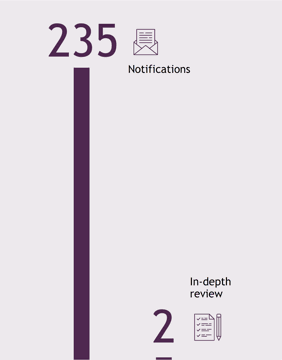
Since its implementation in 2023 through to the end of February 2026, the available data indicates a significant number of FSR notifications compared to a very limited number of in-depth reviews.

As of end of February 2026, there have been just over 230 M&A notifications under the FSR and only two transactions have been subject to an in-depth review. Both cases concluded with behavioural commitments:1

  • Emirati state-owned telecoms company e&’s acquisition of Eastern European telecoms provider PPF Telecoms in September 2024; and
  • Abu Dhabi-based ADNOC’s acquisition of German chemicals producer Covestro, which was conditionally cleared in December 2025.

A similar picture has emerged in relation to the EC’s use of its public procurement powers. Out of more than 3,400 procurement-related submissions (notifications and declarations), the EC has launched only four in-depth investigations.2 All four reviews involved Chinese state owned companies and three of these reviews were closed after the relevant bidders withdrew from the procurement processes.

Scale vs depth graphic

The EC has also initiated several preliminary reviews on an ex officio basis but only two have so far led to in-depth reviews, which are on-going:

  • an investigation into Nuctech, a Chinese-based manufacturer of threat detection systems in December 2025, which included unannounced inspections; and
  • an investigation into Chinese wind turbine manufacturer Goldwind’s activities in February 2026.3

Both cases concern the undertakings’ alleged ability to win more tenders at the expense of competitors as a result of foreign subsidies.

The decisional practice across the three FSR tools suggests the EC is focusing its enforcement efforts on subsidies linked to China and the Gulf and targeting strategic sectors, such as telecoms, security technology and renewable energy.

Sectors most impacted by the M&A tool (to date)

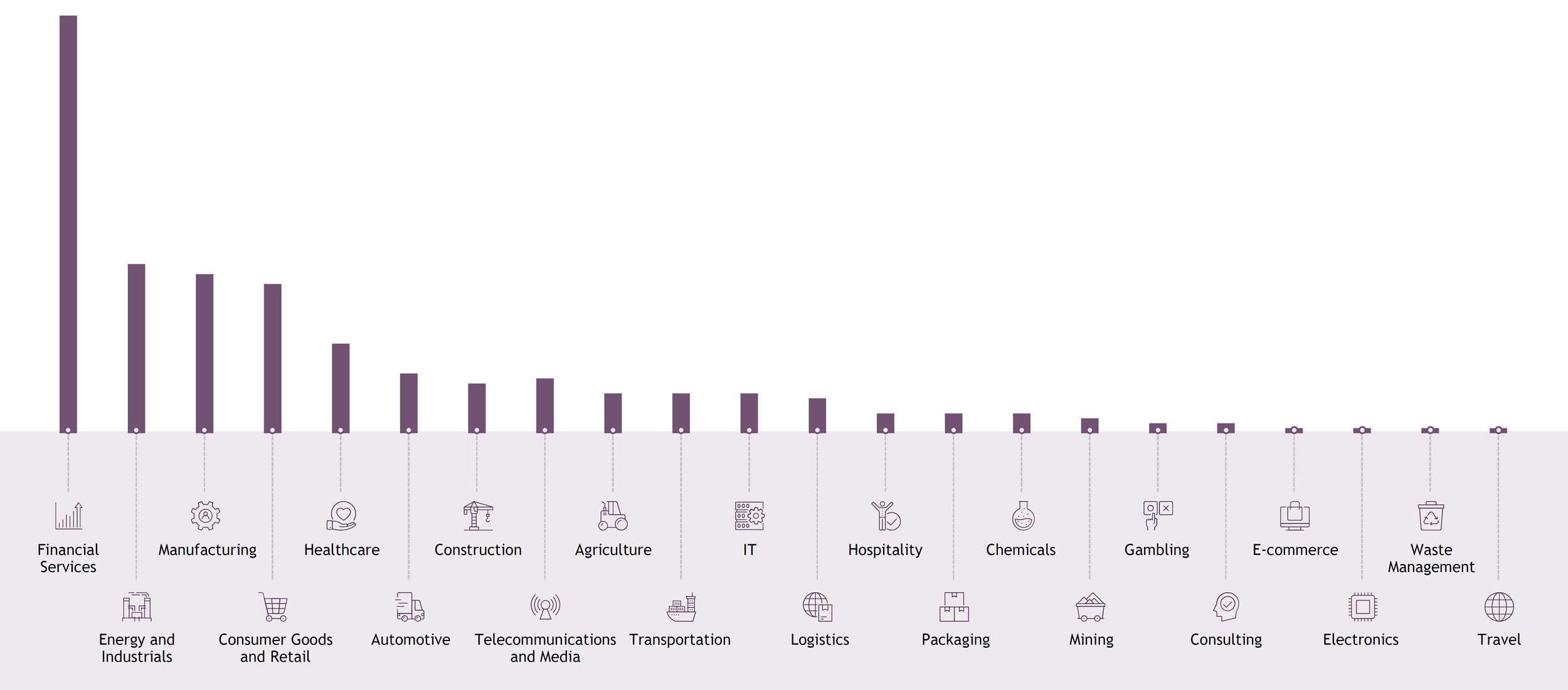
The data indicates that transactions involving private equity acquirers make up the majority of notifications to date.4 In relation to the sectoral spread of M&A transactions, whilst filings have related to a range of sectors, most have been concentrated in financial services, manufacturing, energy, and consumer goods/retail.5

Sectors most impacted by the M&A tool (to date) graphic

Click image above to expand  

Top

Substantive assessment in M&A cases

Recap – when is a foreign subsidy distortive

A foreign subsidy exists where a non-EU country provides, directly or indirectly, a financial contribution conferring a benefit on the undertaking, and which is limited to one or more undertakings or industries. It will be distortive:

  • if it is likely to improve the competitive position of the undertaking in the internal market, which requires there to be a relationship between the foreign subsidy and the activities of the undertaking in the EU, and by doing so,
  • it actually or potentially negatively affects competition.

The FSR sets out a non-exhaustive list of “indicators” that the EC may use to assess whether a foreign subsidy is liable to give rise to a distortion.6 The FSR also lists certain categories of foreign subsidies most likely to distort the internal market, which include “a foreign subsidy directly facilitating a concentration” as well as “a foreign subsidy in the form of an unlimited guarantee for the debts or liabilities of the undertaking”.

Similar to the approach under EU State aid law, the regulation allows for the EC to balance the negative effects of a foreign subsidy in terms of distortion in the internal market against the positive effects, but “most likely distortive” subsidies are less likely to see their negative effects outweighed by positive effects.

How has the EC conducted this assessment in the two conditional approval decisions that it has taken so far?

e& / PPF
ADNOC / Covestro

The EC found that e& and Emirates Investment Authority (EIA) received foreign subsidies from the UAE, consisting of an unlimited State guarantee to e&, as well as grants, loans and other debt instruments to EIA. The EC distinguished between the impact of these foreign subsidies on (i) the acquisition process itself and (ii) the activities of the merging parties post-transaction. It concluded that the foreign subsidies:

  • did not lead to actual or potential negative effects on competition in the acquisition process. e& was the sole bidder for the target and had sufficient own resources to perform the acquisition, which reflected the target's market value, so that foreign subsidies did not alter the outcome of the acquisition process; and 
  • could have led to a distortion of competition post-transaction. The EC found that foreign subsidies such as the unlimited State guarantee would have artificially improved the capacity of the merged entity to finance its activities in the EU internal market and increased its indifference to risk. As a result, the merged entity could have engaged in investments, for instance in spectrum auctions or in the deployment of infrastructure, or acquisitions, “thus distorting the level-playing field relative to other market players by expanding its activities beyond what an equivalent economic operator would engage in absent the subsidies.”

The EC found that ADNOC and Covestro received foreign subsidies from the UAE, including an unlimited State guarantee to ADNOC, as well as a committed capital increase by ADNOC into Covestro and certain advantageous tax measures. The EC again distinguished between the impact of these subsidies on (i) the acquisition process itself and (ii) the activities of the merging parties post-transaction, concluding that the identified foreign subsidies could have potentially led to a distortion with respect to both. More specifically:

  • in relation to the former, the EC considered the unduly favourable conditions offered by ADNOC for the acquisition of Covestro, including the capital increase, may have deterred other investors from making an offer; and
  • in relation to the latter, the EC recalled that, under the FSR, unlimited State guarantees are considered ‘most likely to distort the internal market', and as such liable to distort the combined entity's activities in the internal market. Similar to its analysis in e&/PPF, the EC concluded that the subsidies would have artificially improved the capacity of the merged entity to finance its activities in the EU internal market and increased its indifference to risk, allowing the merged entity to engage in more aggressive investment strategies than absent the subsidies.


Top

Commitments in M&A cases

In both cases, the parties offered behavioural commitments to alleviate the EC’s concerns. Notable commitments included requirements to remove unlimited guarantees and ring-fencing of EU operations. The EC has also shown a willingness to accept more creative commitments, with the parties in ADNOC/Covestro offering an IP licensing arrangement to provide access to Covestro’s sustainability technology. As the regime matures, the EC’s toolkit for commitments is expected to evolve further.

e& / PPF
ADNOC / Covestro
Commitments
A requirement that e&’s articles of association do not deviate from ordinary UAE insolvency law (thereby removing the unlimited State guarantee);

A prohibition on e& and the EIA to finance the target’s activities in the EU internal market, subject to certain exceptions for non-EU activities and for “emergency funding” as well as a requirement that other transactions between those companies take place at market terms; and

A requirement for e& to inform the EC of future M&A transactions, even if they are not FSR notifiable concentrations.
A commitment to adapt ADNOC’s articles of association to ensure that they do not deviate from ordinary UAE insolvency law (thereby removing the unlimited State guarantee); and

A licensing arrangement under which Covestro intellectual property relating to sustainability will remain accessible to the EU market on fair terms enabling others to innovate and advance research in an area that is critical for the EU’s future.

Duration

10 Years (with possible 5-year extension)

10 years (but patents commitments remain in force for lifetime of any licensing agreement)
Implementation
Monitored by independent trustee Monitored by independent trustee


Top

The 2026 FSR guidelines

Clarifications and remaining ambiguities

Following a call for evidence and a public consultation with Member States and other stakeholders last year, the EC issued formal FSR Guidelines in January 2026.

The Guidelines aim “to enhance legal certainty” but acknowledge that, “in light of the early stage of the implementation of [the FSR] and the wide range of market contexts to which it may apply”, the Guidelines are not a ‘checklist’ to be applied mechanically and that “each case should be assessed in light of its own facts and circumstances”.

What's clearer?

The Guidelines provide clarifications in the following key areas:

The Guidelines distinguish between (i) “targeted foreign subsidies” (direct or indirect support of a company’s activities in the EU); (ii) “non-targeted foreign subsidies” (where the support has a general scope or relates to non-EU activities) and (iii) foreign subsidies “not liable to improve the competitive position” of the recipient. The first group of subsidies will generally be considered liable to improve a company’s competitive position in the EU while the second group may be considered to do so in cases of cross-subsidisation. There are some limited safe harbours for addressing market failures outside the EU.

The Guidelines set out the methodology and process under which the EC weighs the negative impacts of the foreign subsidies with any positive effects. For example, the Guidelines make clear that (i) positive effects may include contributions to broader EU policy objectives such as a high level of environmental protection and the promotion of R&D; and (ii) the EC will not object if the positive effects outweigh the negative ones.

The EC places the burden of proof to show that positive effects are likely to arise with the undertakings involved.

The Guidelines list the elements that the EC will consider in its evaluation to request prior notification of any concentrations (or public tenders) that fall below the notification thresholds, for example, (i) the strategic or important character of the undertakings concerned, notably when they own strategic assets such as critical infrastructure or innovative technologies; and (ii) whether it has previously adopted an FSR decision finding distortive subsidies, or opened an in-depth investigation, involving the same or related businesses.

What's still uncertain?

Several key questions remain unanswered in the Guidelines:

Companies still have limited clarity on how to demonstrate that foreign support received outside the EU cannot influence their EU activities.

The Guidelines do not provide categories of subsidies that are deemed positive on balance, requiring a case-by-case assessment in each instance.

The EC retains broad discretion, including when to use its call-in powers, so the risk of such reviews also remains highly case-specific. The Guidelines also confirm that the EC can exercise its call-in powers at any time before a transaction is fully implemented. The EC decision requesting prior notification of the transaction will trigger a suspension obligation.

Top

Outlook for 2026

Enforcement trajectory and geopolitical dynamics

More Phase II investigations likely as the EC gains confidence and experience applying the FSR.
Broader information requests and tougher scrutiny for non EU SOE backed bidders, particularly where state linked financing from China and the Gulf is involved.
EU industrial strategy priorities (e.g., focus on semiconductors, renewable energy technologies, defence/security related sectors) will also likely continue to shape FSR enforcement priorities and perhaps even remedy design.
The EC may also issue decisions in its on-going in-depth investigations against Nuctech (security equipment) and Goldwind (wind turbines). These should offer further insight into how the EC applies the FSR provisions in high risk sectors under its ex officio powers.


The EC has also launched its first formal review of the FSR in August 2025 (with a report due in July 2026). The review will focus on:

01 Assessment of distortive subsidies
02 The balancing test
03 Operation of ex officio investigations
04 Notification thresholds
05 Complexity / compliance costs for businesses


It is anticipated that the review will lead to some streamlining for those transactions that clearly do not raise concerns, such as those involving predominantly EU‑based acquirers.

Top


1 Source: the EC’s case data base: Competition case search (as of 25 Feb 2026).

2 EC official statement before European Parliament Trade Committee in September 2025.

3 Source: the EC’s case data base: Competition case search (as of 25 Feb 2026).

4 Source: the EC’s case data base: Competition case search (as of 25 Feb 2026).

5 Ibid.

See all

This material is provided for general information only. It does not constitute legal or other professional advice.