Boardroom Essential

May 2026

Download PDF version

Need to know for non-executive directors and senior management

Welcome to the Q2 issue of Boardroom Essential, our quarterly publication for non-executive directors and senior management.

If you have any colleagues who would may be interested in our content and like to sign up for our communications, please do email us.

Click on the titles below to jump to the topic you would like to read.

Shareholder activism update

Shareholder activism remains firmly on the corporate agenda, as global campaign volumes hold strong. In this piece we look at current activism trends and examine some recent high-profile European campaigns.

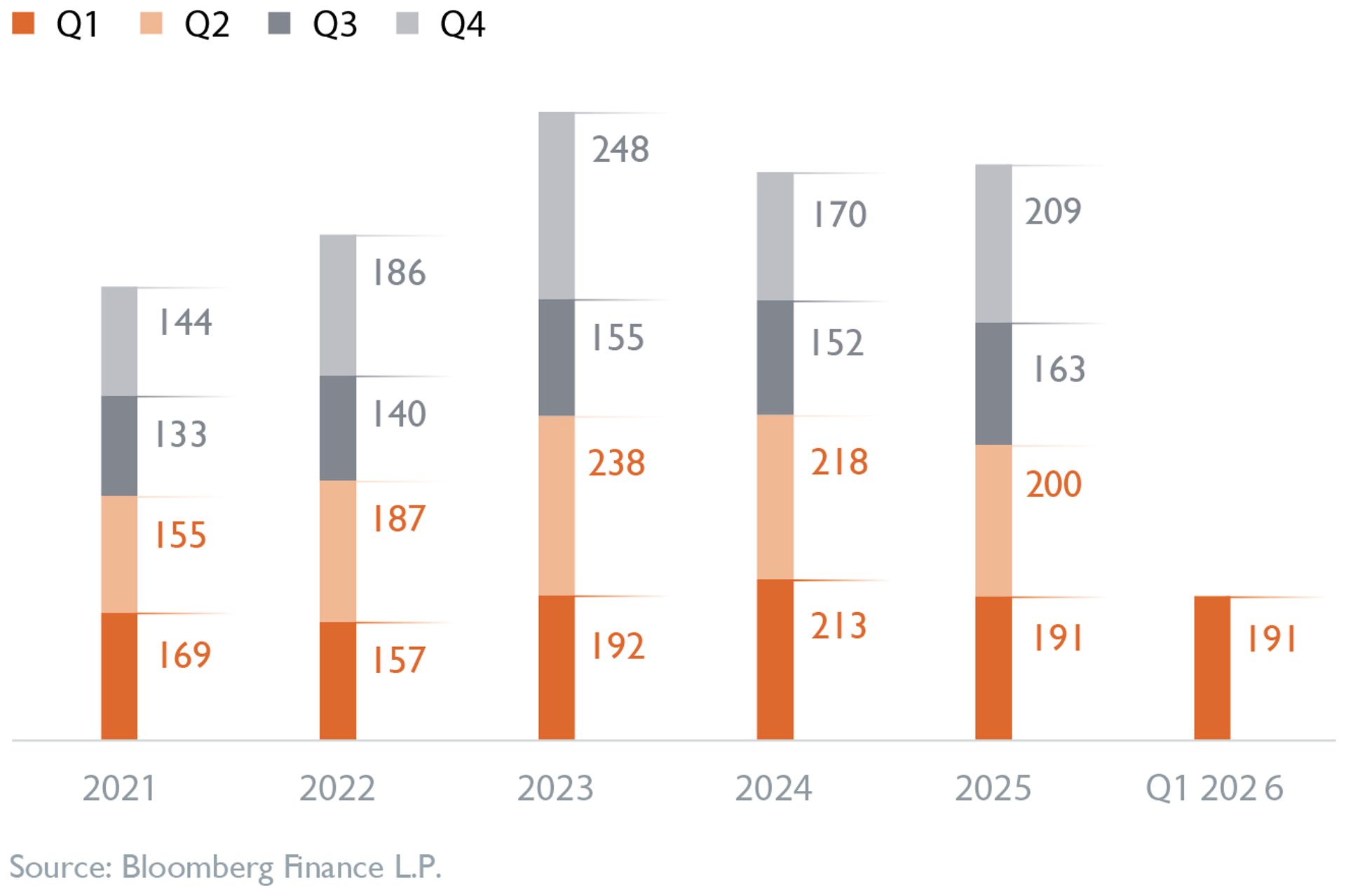
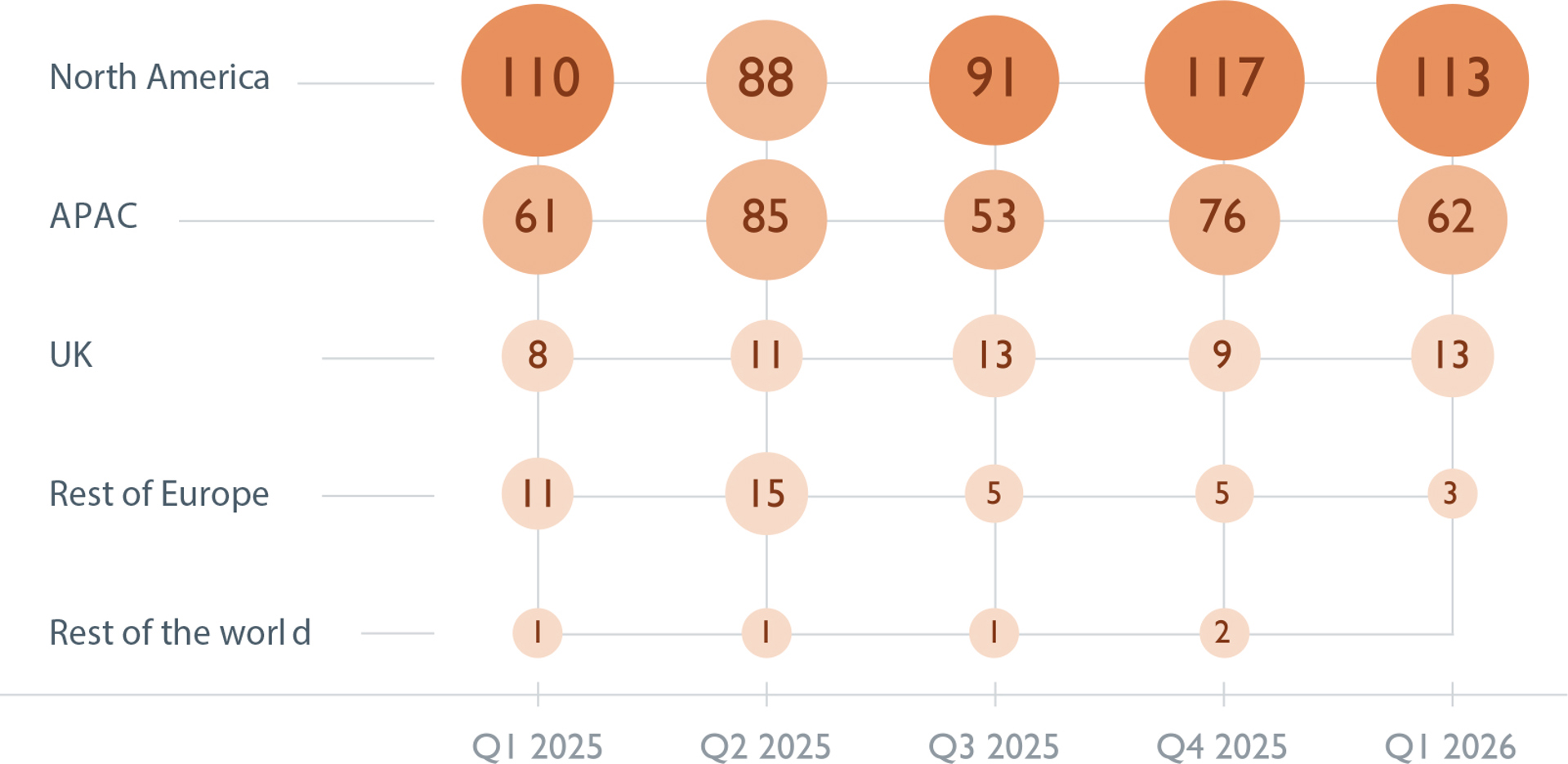
The US and Japan (which accounted for 93% and 80% of the campaigns recorded in the North America and APAC regions respectively) together dominated global activism activity. Europe saw another busy quarter sustaining the momentum seen in the second half of 2025 with activity focused on UK
listed companies which were targeted in 13 of the 16 public campaigns in Europe.

Number of campaigns globally
Number of campaigns globally

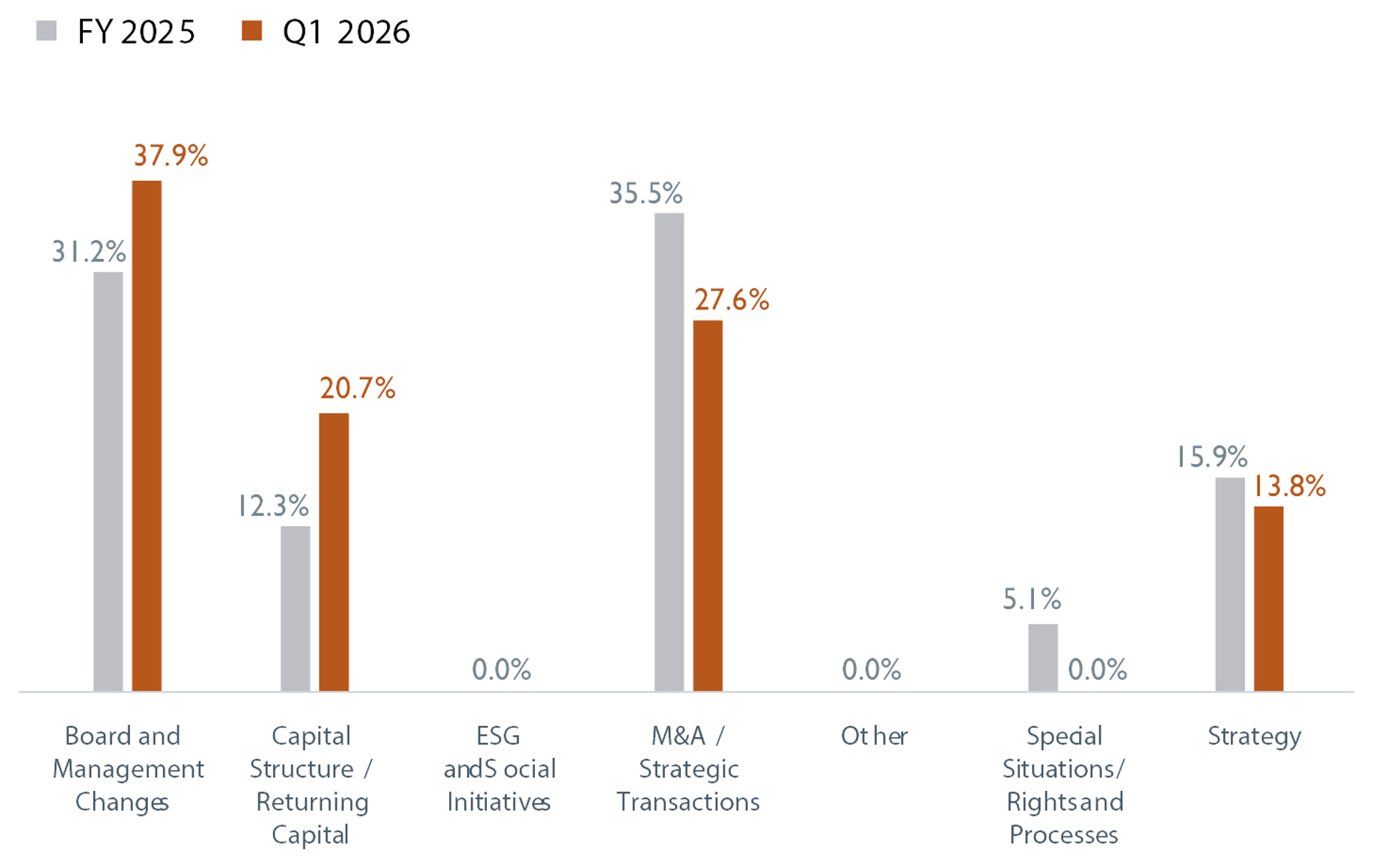
Board and management changes remain the leading campaign objective globally (43% of campaigns) often alongside a broader agenda. Activists achieved representation on the boards of 39 targets globally in the first quarter, already over a third of the full-year total for 2025, 22 with the proposed appointment of a Cevian nominated representative to AkzoNobel’s Supervisory Board thought to be a first in the Dutch market. Activists have maintained their focus on M&A, with M&A related demands appearing on the agenda of 27% of global campaigns playing out.

Number of campaigns by region
Number of campaigns by region

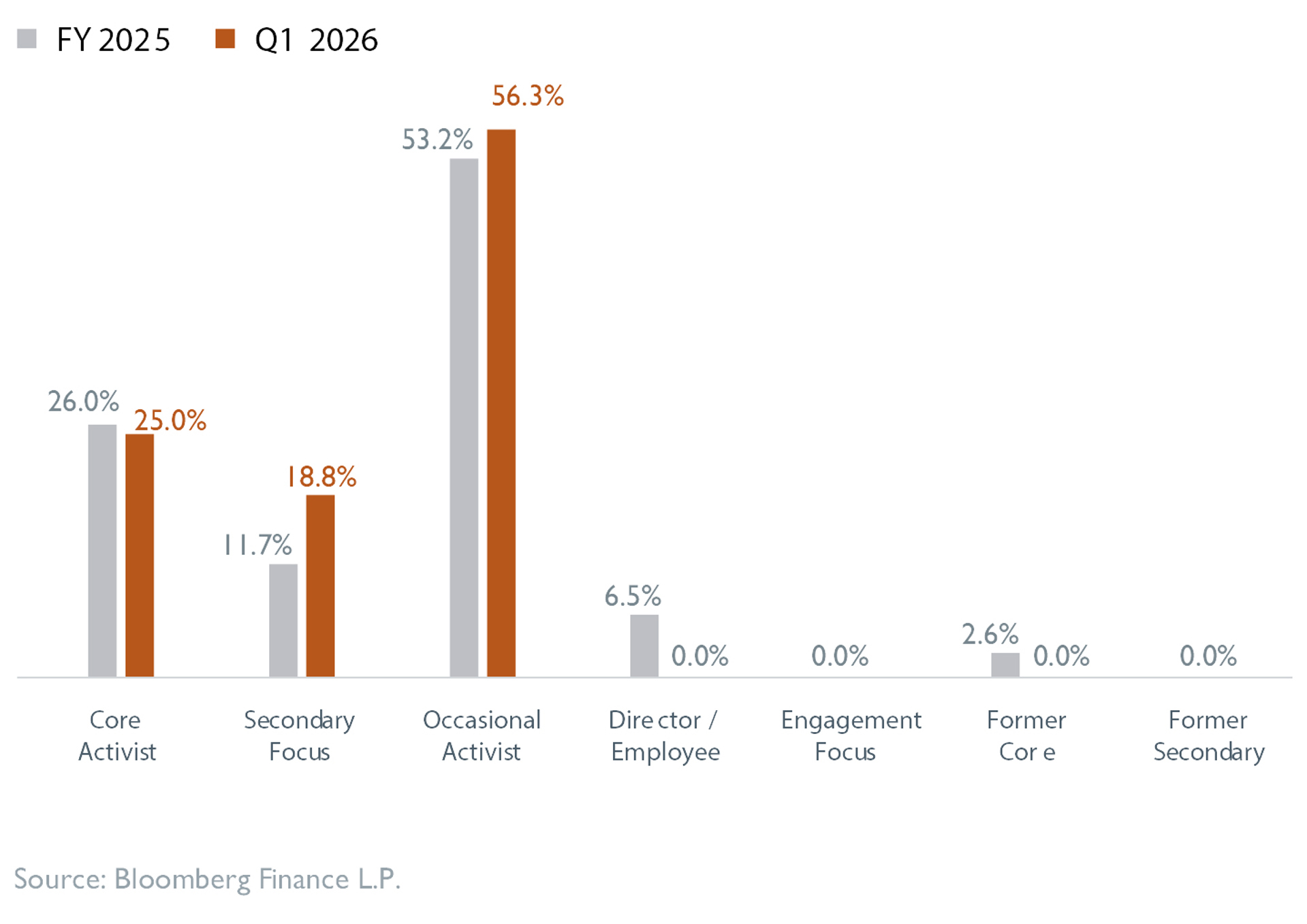
Although traditional activist investors wage the highest number of campaigns globally, the number of campaigns by occasional activists is almost on equal footing. A history of successful campaigns is no longer a prerequisite to win support from proxy advisers and institutional investors. AI is unsurprisingly reshaping the activist landscape, facilitating occasional activists in spotting opportunities, and building theses on potential targets – raising the bar for target preparedness and campaign defence.

UK campaigns dominate European activism as board changes and M&A objectives feature high on the agenda

The UK, which is consistently the busiest market in Europe for activist activity, saw an outsized share of European activity as public campaign numbers dipped in continental Europe whilst remaining robust in the UK. Activism preparedness remains a priority for UK listed corporates, as the data reveals only part of the story – for each public situation, multiple campaigns are initiated and, in most cases, remain behind closed doors.

The leading US-based activist funds remain the cornerstone of the current European activism landscape and have been responsible for the most prominent recent UK campaigns – including Elliott’s positions in bp and the London Stock Exchange Group and Saba Capital’s interventions at various UK investment trusts.

Activist type in Europe
Activist type in Europe

Demand for board and management changes continues to be the leading objective in UK activism campaigns – with board representation demands on the agenda of 8 of the 13 UK campaigns that started this quarter. M&A objectives, together with demands for a strategic review or break-up, feature prominently – together appearing on the agenda in 41% of European campaigns.

Capital structure and capital returns objectives were also on the agenda – cited 6 times across the 13 UK campaigns – signalling growing activist pressure on UK boards to sharpen their capital allocation discipline in the context of an ongoing challenging macro-economic environment.

European campaign objectives
European campaign objectives

bp faces countervailing shareholder pressures from Elliott and climate activists

  • Follow This, a Dutch non-profit activist investor, has been critical of bp’s strategic pivot back towards hydrocarbons and the associated reduction in green energy investment – linking the turnaround to pressure from Elliott.
  • In January 2026, Follow This stated that it, together with a group of institutional investors, had submitted shareholder resolutions requiring bp to publish a report on its strategy, investments, production forecasts and cash flows for scenarios of declining demand for fossil fuels.
  • 6 March 2026: bp’s AGM notice does not contain a resolution requisitioned by Follow This. A similar climate resolution filed by the Australasian Centre for Corporate Responsibility does appear on bp’s AGM agenda. bp has recommended that shareholders vote against it.
  • 25 March 2026: Following bp’s decision not to table the resolution at its AGM, scheduled for 23 April 2026, Follow This reportedly issues a letter before action, giving bp until 1 April to respond.
  • 23 April 2026: shareholders reject two resolutions at bp’s AGM – a resolution to permit wholly virtual meetings and a resolution to revoke two historic shareholder resolutions mandating bp to make certain climate change disclosures.
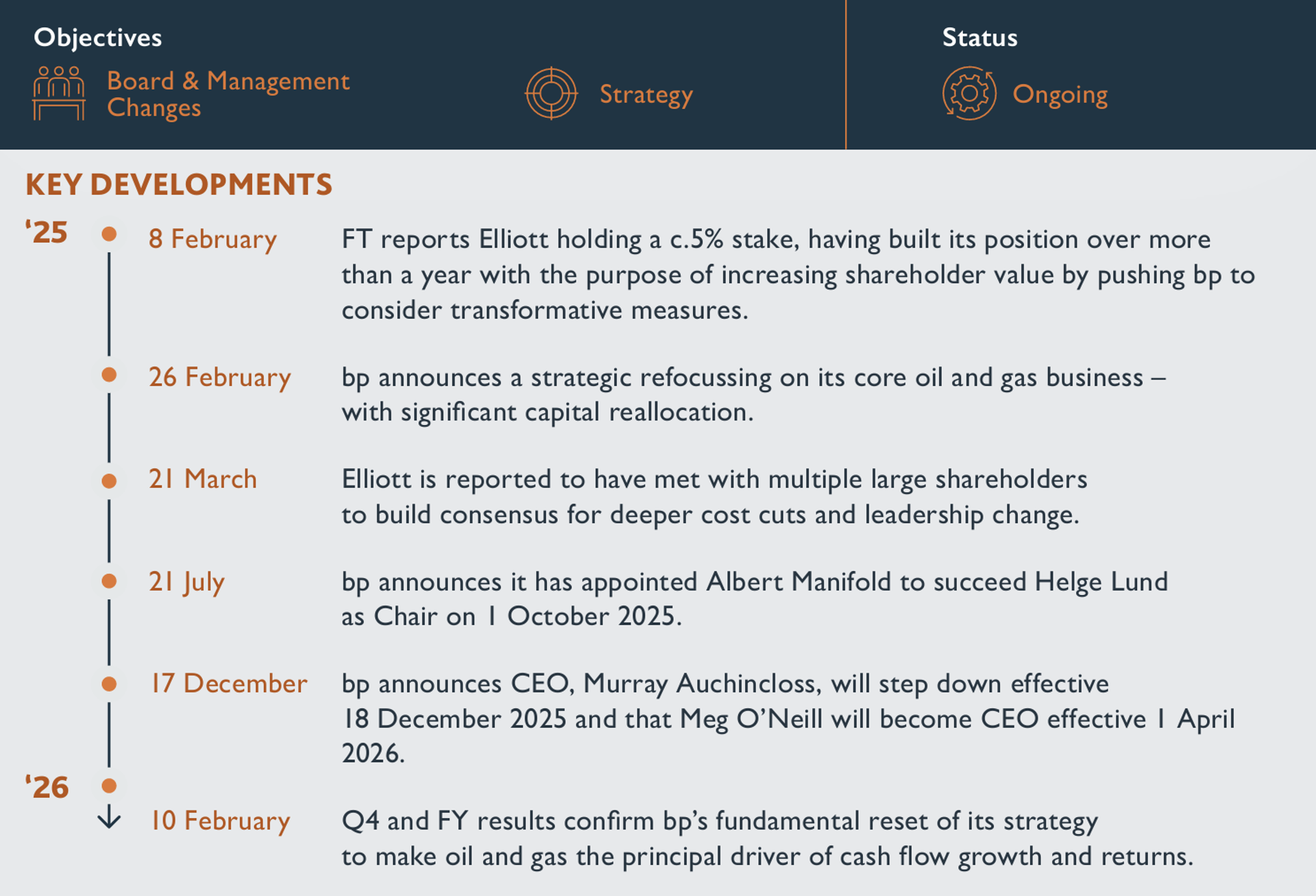
bp objectives

Elliott reportedly seeks to smooth political sensitivity

  • Elliott’s shareholding in London Stock Exchange Group (LSEG) has reportedly prompted concern within the UK Treasury given the importance of LSEG’s role in the UK’s capital markets.
  • The UK government was alleged to be concerned that Elliott’s demands could include a break-up of LSEG or a re-listing in the US.
  • Elliott has reportedly proactively engaged with UK Treasury officials to address those concerns.
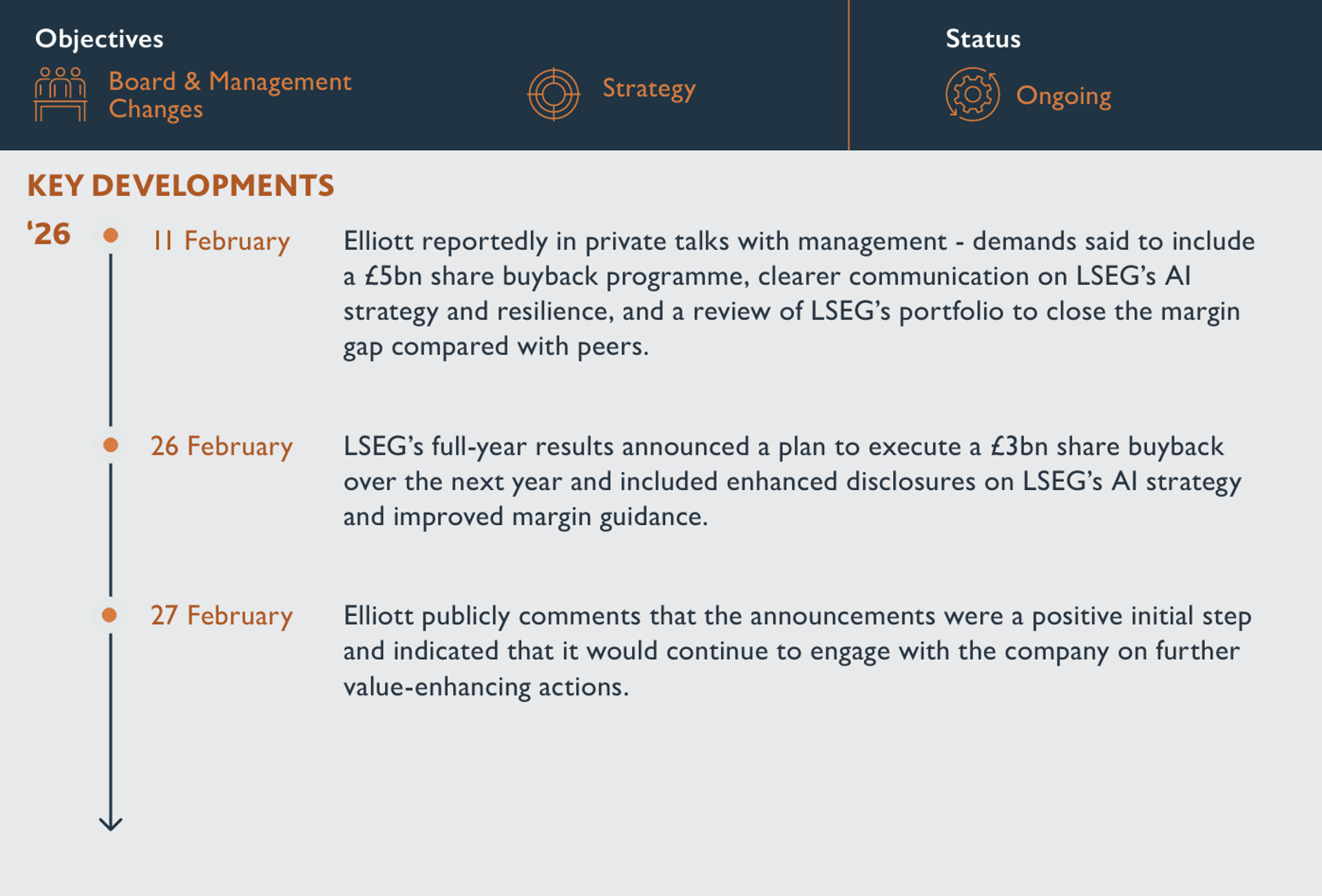
Recent high profile European campaigns

A landmark activist driven board appointment for the Dutch market

  • Activist-driven director appointments are structurally very challenging in the Netherlands. In the Netherlands, director appointments are tabled to the AGM via a board nomination. There is typically no opportuity for an activist to place a rival candidate on the same agenda in competition with the board’s nominee – the only option is to vote the board’s candidate down.
  • Schuchna’s proposed appointment to AkzoNobel’s Supervisory Board, achieved by persuading the company to table the nomination itself, is thought to be a first in the Dutch market – but consistent with Cevian’s typical approach.
  • Cevian has achieved representation on the boards and/or nominating committees of c. 75% of all its disclosed portfolio companies since its founding in 2002 (although the percentage is significantly lower when looking at Cevian’s investments in UK listed companies).
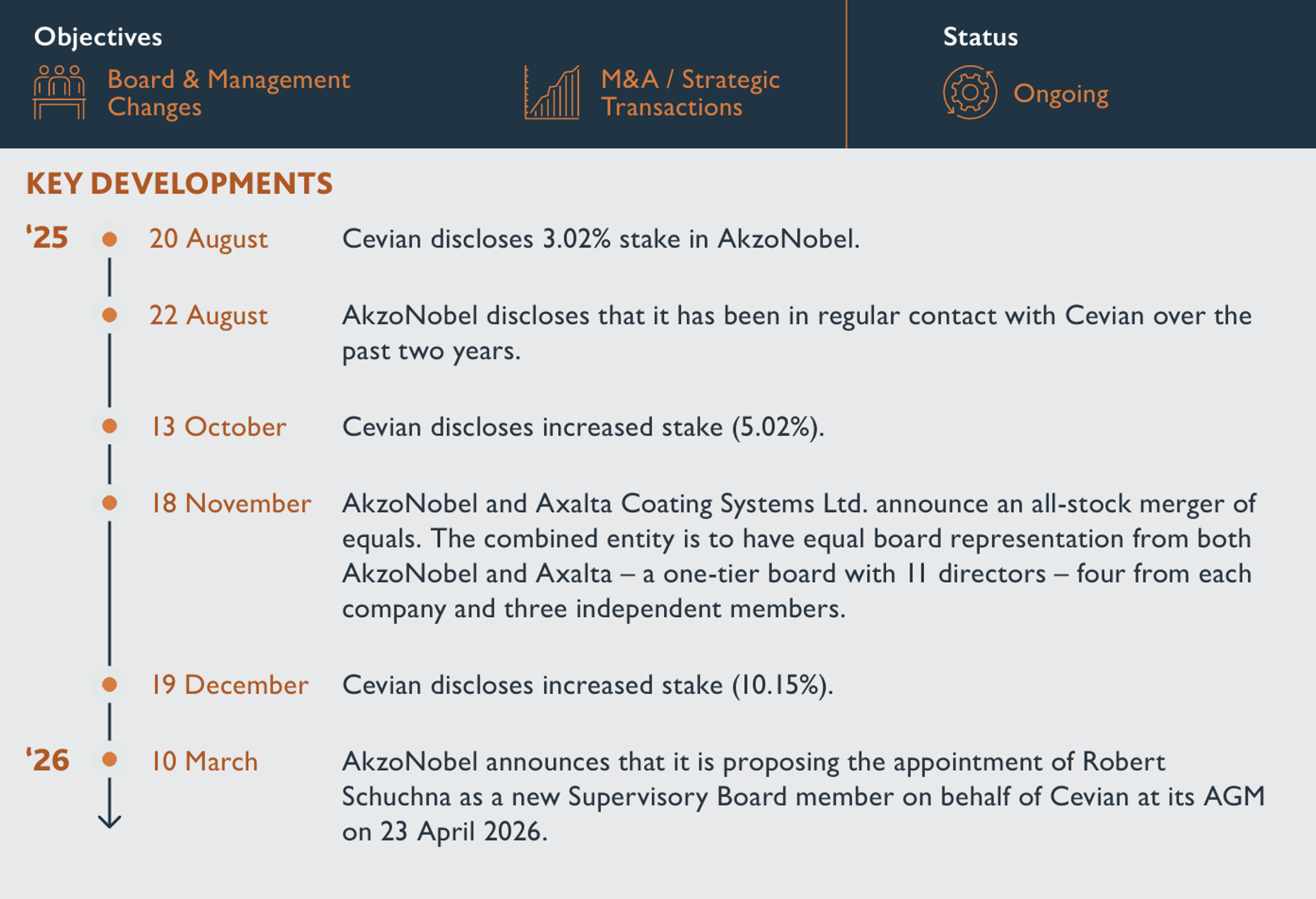
Recent high profile European campaigns


Back to the top

UK face “perfect storm” for cyber security: lessons for boards from 'Cyber UK'

In April, the UK Government held its flagship cyber security conference, Cyber UK. The clear message coming from the Government was that: (i) the UK is facing the perfect storm in terms of cyber risk – acute geopolitical uncertainty combined with fast-developing technological advancements; and (ii) Government and industry will need to work together to combat this evolving threat. Boards are clearly already taking cyber risk seriously but what are the practical takeaways from this evolving landscape and the changing expectations of Government and regulators?

Increased risk 

  • Geopolitical uncertainty: The NCSC and ministers were keen to stress that the UK is currently in the ‘grey zone’ between peace time and conflict. This means seeing cyber-attacks not just as a criminal act for financial gain but a routine feature of geopolitical conflict used for disruption and destabilisation. There have already been warnings of a heightened risk of indirect cyber threat for those organisations who have a presence, or supply chains, in the Middle East and specific guidance those organisations, and CNI (who may face increased attacks), can follow.   
  • AI accelerating cyber-attack capability: While AI‑related cyber risk has been approaching for some time, speakers at CyberUK from across the world provided examples of its capabilities and risks.
    • AI firm Anthropic released its Mythos model in April which is, according to the UK’s AI Security Institute (AISI), substantially more capable at cyber offence than other models. The Government is so concerned by its capabilities that it has written an open letter to business leaders, warning of the threat. Regulators like the FCA and OFCOM have also warned of increased scrutiny in light of these technological developments. At the conference, Anthropic’s Head of Threat Intelligence described how attackers progressed, over the course of just a few months last year, from using AI primarily as a sophisticated search tool to deploying it as a fully‑fledged assistant across the attack lifecycle (supporting reconnaissance, penetration testing and the creation of targeted phishing campaigns).
    • AI is already lowering the barrier to entry for cyber criminals and making them more efficient (increasing the volume of expected attacks), and its capabilities are accelerating even faster than had been envisaged. The AISI assess that the capability of these most powerful AI (frontier) models is now doubling every 4 months, compared to every 8 months previously. So, for example, further accelerating the reduction in the ‘dwell’ time between infiltration and attack, which used to be measured in weeks or months but can now be less than an hour.
    • That said, one of the risks with this proliferation of AI-enabled attacks is their indiscriminate nature. Speakers from the US and Japan highlighted ‘bad’ attacks that had been prevented but where the encryption tools used simply didn’t have functioning decryption built in or ‘noisy attacks’ which are easy to spot. The attacks are therefore not necessarily more sophisticated, with many detectable with effective monitoring, but more voluminous.  
       
  • Humans still matter: Law enforcement agencies were also keen to emphasise the growth and sophistication of AI in human exploitation. That includes phishing, deep fake videos and, in some cases, de facto blackmail of key staff if they or their family are hacked. The clear lesson being that multi-human verification remains key alongside AI-supported detection and response systems.

Rising expectations on organisations and boards

  • Move from cyber security to cyber resilience: Taking this together, the key theme was that cyber resilience has to mean having a ‘no pay’ plan fit for your business. This includes both technical work (system segregation, secure back-ups, principle of least privilege etc.) and operational and governance processes (for example, regularly practising incident response at gold and silver team level). As the NCSC said in a clear steer as to what ‘acceptable’ might look like in any ‘look back’ scenario, failing to grasp this is failing to respond to today’s reality.
  • Cyber resilience pledge: Security minister Dan Jarvis echoed this when announcing the government’s ask every major organisation to sign a new Cyber Resilience Pledge. The Pledge invites organisations to make a “public commitment” to their investors,  customers and supply chains, to make cyber security a Board responsibility, to sign up to the NCSC’s Early Warning service and to require that suppliers are Cyber Essentials certified (which is the Government’s cyber certification scheme). This Board commitment builds on a series of recent interventions, from changes to Provision 29 of the Corporate Governance Code and last year’s Government letter to all major organisations, to the more recent letter on the latest AI threat which expressly asks boards to discuss cyber risk at their next meeting if they have not done so recently.   
  • Using AI in cyber defence: While AI is creating new cyber risks, it can also help cyber security professionals, for example by finding vulnerabilities and patching them at speed. Cyber defenders (both those within your organisation, and experts appointed by your CISO) will need to be at least as adept at using AI as their adversaries which may involve re-assessing current capabilities.

Against this backdrop, organisations will be keen to avoid being an early test case for regulatory scrutiny, while ensuring that boards, GCs and CISOs are aligned on risk, investment and accountability.

The good news is that there is an expanding body of guidance and support available to help, including targeted assistance for SMEs. At a time when supply‑chain exposure is receiving governmental and regulatory focus, this should help organisations strengthen not only their own resilience, but that of smaller suppliers, without imposing disproportionate cost.

Back to the top

Reforming the UK competition regime

In our February 2026 edition, we flagged that the UK government had announced the launch of a consultation to speed up and simplify competition investigations by the Competition and Markets Authority (“CMA”). That consultation - “Refining Our Competition Regime” - closed on 31 March 2026 and the Department for Business and Trade (“DBT”) is now reviewing responses. In this article, we look at the key proposals, highlight the areas of greatest concern, and consider what the reforms could mean for boards and businesses.

The Consultation at a glance

The consultation covers a broad range of reforms, including statutorily codifying the CMA’s current practices applying the merger jurisdictional tests, extending Phase 1 remedies timelines, granting enhanced powers to investigate algorithms, requiring sunset clauses on market remedies, and pausing statutory deadlines over Christmas.

However, two proposals stand out for their significance.

Single-phase market review and new ‘effect on consumers’ test

Currently, the CMA's markets work operates in two stages: a preliminary market study, which can then be followed by a formal market investigation if the CMA concludes it has reasonable grounds to suspect that one or more market features prevents, restricts or distorts competition. Combined, the current process can take over three years.

The government proposes combining these two stages into a single-phase market review, with a statutory time limit of 24 months (extendable by six months).

A streamlined process should reduce the prolonged uncertainty that market investigations can impose on entire industries. However, the proposal also raises concerns:

  • the government suggests replacing the current legal test - an adverse effect on competition - with an adverse effect on consumers test. This is a potentially significant broadening, as the consumer standard is untested in this context and may be difficult to apply in practice, particularly in intermediary markets where harm to consumers may be indirect; and
  • a single-phase process offers quite minimal time-savings (DBT has proposed a 30-month time limit, compared with the current 3-year timeline) but gives the CMA access to its full range of remedies - including structural remedies - from the outset. Without the procedural separations that exist in the current two-stage model, the new regime would ‘raise the stakes’ for investigative targets from the start.

Replacing the independent Phase 2 Panel

The most significant - and most debated - proposal is to replace the independent panel that currently decides Phase 2 merger and market investigations with a sub-committee of the CMA Board. The panel structure has been a feature of UK competition law for decades, retained precisely to provide a "fresh pair of eyes" and guard against confirmation bias.

Under the proposed model, the CMA Board would oversee decision-making at both Phase 1 and Phase 2. Several concerns have been raised in response:

  • the quality and diversity of decision-making could be affected if it proves difficult to recruit independent experts of the calibre currently found on the panel, or if CMA senior executives lack bandwidth to engage properly with complex Phase 2 cases;
  • parties’ appeal rights are already limited to judicial review - a standard originally calibrated on the basis that an independent second-stage review exists.  Without the panel, there is a strong case for strengthening procedural safeguards, such as more robust appeal rights and a formal right of access to the CMA’s investigative file; and
  • questions have also been raised about the perception of political independence, particularly given the broader context of the government’s growth agenda and the recent change in CMA leadership.

Outlook and key points for boards

These proposals sit within the broader context of the government’s drive to make the UK a more attractive place to do business. Since the publication of the government’s growth-focused Strategic Steer to the CMA in May 2025, the CMA has undertaken a comprehensive programme of operational reform under its “4Ps” framework - pace, predictability, proportionality, and process – to meet the government’s call.

The CMA’s merger statistics suggest this shift is already having an effect. Between April 2025 and February 2026, only seven Phase 1 cases progressed to a Case Review Meeting - the internal CMA meeting reserved for mergers that raise potentially material competition concerns. As shown in the table below, those 7 cases (23% of the CMA’s Phase 1 Decisions in that time period) represent a sharp decline compared to recent years in both absolute numbers and percentage of cases. These figures suggest that governmental pressure may already be influencing decision-making in practice.

Fiscal Year

Total Phase 1 Decisions

Case Review Meetings (“CRM”)

% of Cases Proceeding to CRM

2021-2022

55

21

38%

2022-2023

43

31

72%

2023-2024

54

32

59%

2024-2025

41

20

49%

Apr 2025 - Feb 2026

31

7

23%


For boards, the key message is one of watchfulness. The consultation’s proposals - particularly the removal of the independent panel - represent a significant structural shift in how the UK’s competition regime operates. Although intended to improve pace and accountability, the changes do not account for the lost procedural safeguards important to provide businesses with confidence that their deal will undergo a fair, impartial review subject to appropriate appeal standards. Boards with active or prospective M&A strategies, or operating in markets that could attract CMA scrutiny, should monitor closely the government’s response to feedback.

Back to the top

Gender equality action plans: guidance for employers 

Large employers (250 or more employees) are going to have to publish ‘gender equality action plans’ alongside their existing gender pay gap reports under new rules being introduced by the government under the Employment Rights Act 2025. The purpose of action plans is to support employers to take effective action to improve workplace gender equality. Action plans will show the steps an employer is taking to address the organisation’s gender pay gap and support employees experiencing menopause.

Action plans have been introduced on a voluntary basis from April 2026 and will become mandatory from spring 2027. Employers can publish an action plan any time during the 2026-2027 gender pay gap reporting year, with a deadline of 4 April 2027 (for private sector employers). 

The government is encouraging employers to use this year to practise.  However, as these voluntary submissions will be published alongside, and in the same way as, gender pay gap data, the approach being taken by those who choose to publish their action plans this year will be publicly available. This raises some interesting questions about the extent to which they may become regarded as recommended good practice, particularly in recruitment, promotion and pay transparency.

The government has issued guidance for employers on how to implement action plans, together with a list of actions.  There are 18 recommended actions under the following five headings: (i) Recruiting staff, (ii) Developing and promoting staff, (iii) Building diversity into your organisation, (iv) Increasing transparency, and (v) Supporting employees experiencing menopause.

Employers producing an action plan must choose at least two actions to include in their plan:

  • at least one action to address their gender pay gap; and
  • at least one action on supporting employees experiencing menopause.

Employers can choose actions which are “new or in progress” or “embedded” (already an established part of working practice) but must choose at least two actions that are new/in progress.

The recommended actions, which have been developed using expert insight and academic research, are specific and include:

  • Recruiting staff: the six actions including under this heading cover issues such as making job descriptions inclusive (e.g. not asking for an explanation of CV gaps), encouraging applications from a range of candidates (such as by offering paid “returnships” to encourage workers who have taken a break to come back to work), and reducing unconscious bias in CV screening (using anonymised application forms and CV templates). 
  • Developing and Promoting staff: the three actions include offering mentoring, sponsorship and other development programmes, and automatically considering all eligible employees for promotion. Rather than relying on staff to self-nominate or be selected by a manager for promotion, this action would shift the presumption for promotion, instead allowing employees to ‘opt out’ of a promotion process; at the same time, employees should not be disadvantaged if they decide to opt out.  
  • Building diversity into your organisation: there is only one action in this category, which is setting targets to improve gender representation.
  • Increasing transparency: the two actions under this heading are to increase transparency in pay, promotion and rewards, and to enhance and promote flexible working and leave policies. The recommended actions on pay indicate that the government is taking its lead from the requirements of the EU Pay Transparency Directive which is due for implementation by EU member states within the next couple of months. 
  • Supporting employees experiencing menopause: the six listed actions include training managers to support employees experiencing menopause, offering occupational health advice, setting up support groups and networks, offering workplace adjustments, conducting a risk assessment, and reviewing policies and procedures to meet the needs of employees.

The guidance explains employers will have to provide a short supporting narrative for each action, as well as one for the overall action plan.  For new/in-progress actions, the narrative should explain the choice of action and how the employer will track whether it is improving gender equality; for embedded actions, it should show how the employer made it an established part of working practice.

Action plans must be approved by a “responsible person” – usually a director, partner or senior officer.  When the plans become mandatory, employers will have to monitor progress at regular intervals and review action plans.

Back to the top

Executing M&A in a volatile market

Dealmaking is operating against a background of acute geopolitical and macroeconomic volatility. 

The impact has been sharpened by ongoing conflict, political instability, regulatory fragmentation and shifting trade and investment dynamics. The economic ramifications – from volatility in energy and commodity markets to inflationary pressures and trade flow disruption – add significant complexity to deal planning and execution.

For boards, this environment is impacting how boards assess strategic M&A, and sharpening focus on timing, risk and strategic alignment.

The persistent “new normal”

This environment is undoubtedly more acute – and unpredictable - than in the recent past, however it is no longer unprecedented. Businesses have shown remarkable adaptability in responding to successive waves of disruption over the last decade.

Whilst the shifting dynamics are making it increasingly challenging to get deals done – as risk appetites are reined in and uncertainty weighs on confidence - deal activity has proven robust through these cycles despite the headwinds.

Dealmakers are becoming accustomed to sustained uncertainty in what has come to be seen as a “new normal”, and deploying creativity and discipline to navigate the landscape, and boards are adapting to volatility and sustained uncertainty as an enduring feature of the operating environment.

And, whilst uncertainty can weigh on deal activity, it also presents opportunity to those with the resilience and conviction to move ahead – and transactions are continuing where there are strategic or commercial imperatives to execute.

As transactions become more complex and challenging to deliver, they require greater focus on execution risk, timing and structure.

Key implications for boards

Boards are likely to see increased focus on:

  • Valuation and pricing: bridging valuation gaps remains critical, with a wider range of pricing structures being used to progress transactions - requiring careful board consideration of risk, value and long-term outcomes.
  • Deal certainty and risk allocation: deal certainty matters more than ever, sharpening the focus on risk allocation in the context of continuing regulatory scrutiny - an area where active board oversight is key.
  • Execution discipline: successful dealmaking amid uncertainty continues to require resilience, creativity and discipline, underpinned by clear strategic rationale and robust governance.

Executing M&A in a volatile market

In this piece, published as part of our Horizon Scanning Strategic M&A series, we consider how dealmaking is evolving in response to market conditions. 

Drawing on our experience, we examine the recurring themes and share practical insights and considerations for dealmakers continuing to execute on strategic M&A and deliver transactions in the current environment. In doing so, we aim to support boards in understanding how these market dynamics are translating into M&A strategy and deal execution.


Valuation gaps

How are buyers and sellers bridging the gap on prices?

Bridge mechanisms

Price continues to be the most fundamental aspect of M&A transactions that is impacted by wider geopolitical and macroeconomic uncertainty.

Valuations are acutely vulnerable to the unpredictability of geopolitical and macroeconomic events, as commercial teams and financial advisers contend with modelling the impact on projected performance and sustainability of a business over the longer term.

As uncertainty rises, parties inevitably prioritise risk avoidance and focus on downside protection.  At the same time, this can lead to a flight to quality and greater competition for the best opportunities, driving up average deal values for fewer prized assets.

Against this backdrop, dealmakers are increasingly relying on the full range of “bridge mechanisms” to close the gap and get the deal done - whether by altering risk profiles, mitigating exposure to downside risks, or linking payments to future performance.

In this section, we explore the most prevalent bridge mechanisms that are being utilised in M&A transactions to close the price gap, and share practical steps that dealmakers are using to get deals across the line.

01 EARN-OUTS

Earn-outs involve part of the purchase price being calculated by reference to the target’s post-acquisition performance.  They are used to bridge valuation gaps where parties’ views and expectations differ on future earnings, allowing consideration to adjust based on actual performance and thus facilitating risk‑sharing between the buyer and seller.

Earn‑outs are particularly relevant where uncertainty affects the target’s future earnings profile, including where:

the target operates in a sector or has an industrial base that is particularly sensitive to geopolitical or macroeconomic factors (e.g. tariffs, trade measures, supply chain disruption or commodity price volatility); and/or

earnings have been adversely affected by such factors or vulnerabilities exposed, without certainty as to whether the impact will prove to be temporary or structural.

Practical considerations

Well-prepared parties will assess the feasibility of an earn-out early in the process, including to determine whether suitable performance metrics (whether financial or operational) can be measured objectively in light of the business and the buyer’s plans for it after completion.

Earn-outs can result in disputes if not thoughtfully structured and clearly drafted.  Every earn-out, and the parameters that underpin it, is unique to the target business.

Engage accounting and tax specialists from the outset to ensure metrics are workable and the intended tax treatment can be achieved.  If the earn-out is to be based on specially prepared earn-out accounts and an underlying reward formula (rather than annual accounts), specific accounting policies may also be required.

Sellers should seek robust conduct protections to prevent artificial manipulation of performance metrics, including ordinary‑course obligations and arm’s‑length dealing requirements.  It may also be appropriate to consider security for the earn-out.  Clear dispute resolution procedures will be required.

Earn‑outs are commonly structured over one to three financial years post‑completion, to balance alignment of interests with the need for certainty.  The earn-out payment could be a single fixed payment at the end of the period or multiple, incremental payments.


02 DEFERRED CONSIDERATION AND VENDOR FINANCING

Deferred consideration

Deferred consideration involves the seller agreeing to receive part of the purchase price at one or more specified dates following completion, rather than the entirety of the purchase price being paid in cash at completion. 

Unlike an earn-out, the deferred amounts are typically fixed and not contingent on post-completion performance, providing greater certainty to both parties on the amount, whilst still allowing the buyer to defer its cash outlay.  Deferred consideration is used to bridge valuation gaps where buyers are unwilling or unable to commit the full purchase price upfront, but where the parties are sufficiently aligned on headline valuation.

From a buyer's perspective, deferred consideration reduces the immediate funding requirement, can ease pressure on acquisition financing and allows the buyer to use the target's own cash generation to fund subsequent instalments.  For sellers, the structure preserves headline deal value and avoids the uncertainty inherent in performance-based mechanisms, though it introduces credit risk on the buyer and delays receipt of full proceeds.

Vendor financing

Vendor financing goes further, with the seller agreeing to lend part of the purchase price to the buyer, typically through subordinated loan notes or other debt-like instruments. This offers sellers enhanced credit protection through subordination terms, security and defined repayment schedules.

For a buyer, vendor financing can provide greater flexibility in structuring acquisition financing, particularly where third-party debt markets are constrained or where lenders require the seller to retain economic exposure as a condition of providing acquisition finance.

That said, vendor financing introduces additional complexity - including intercreditor considerations and the need to align with the buyer's external financing arrangements - which may not be warranted where the deferred consideration is modest or the credit risk is low.

Practical considerations

  • There is significant flexibility in the terms of both deferred consideration and vendor financing arrangements, but careful and early planning to optimise for tax and accounting outcomes is key.
  • Sellers typically focus on credit protection, including (in the case of vendor financing) subordination terms, security, interest rates and clear repayment profiles.  If payment of deferred consideration is conditional on certain outcomes (such as financial performance targets), the conditions and consequences will need to be clearly drafted.
  • Buyers should ensure that the terms of any deferred consideration or vendor financing align with their external financing constraints, including intercreditor arrangements and covenant packages. 
  • Both structures are more commonly deployed in bilateral or less competitive processes.  In an auction process, a proposal that relies on deferred consideration or vendor financing may signal limited alternative funding options and could put the bidder at a disadvantage.


03 ROLLOVERS AND STRUCTURED EQUITY

Whilst not a novel structure, there has been an increase in deals where a rollover is used to help bridge a valuation gap.  Rollovers involve a portion of the consideration for a sale being reinvested into the purchaser’s equity structure rather than being paid out to the seller directly in cash.

From a buyer’s perspective, this reduces the size of the upfront equity cheque (typically, whilst still acquiring control) and requires the seller to stand behind the business plan going forward, ensuring it has “skin in the game” and better aligning interests on future performance – a particularly important feature on carve-out transactions.  It also demonstrates seller confidence in the business and allows sellers to retain upside exposure, which can be appealing where there is anticipated growth.

Practical considerations

A rollover adds significant complexity to deal structure, as it introduces a retained shareholding in the business after completion – and requires negotiation of a shareholders’ agreement between buyer and seller.

If a rollover structure is contemplated, early thought to the terms of future shareholding arrangements will be important to avoid losing pace in a competitive auction process.  A term sheet is typically agreed in advance, and key considerations include:

  • governance and control rights, including any board seats and the scope of seller influence over strategic commercial matters;
  • minority protections, typically focused on economic rights such as rights to receive distributions and veto rights over changes to capital structure;
  • liquidity and exit rights, such as the timing and structure of an exit, ability to sell to third parties and who controls any sales process; and
  • information and audit rights in relation to the target business, which will be particularly important where the seller is a listed company.

Structured equity

Deals can also incorporate differentiated equity structures – including ordinary, preferred and subordinated equity tranches – as a bridging mechanism.  These structures allow parties to tailor the economics of a transaction by allocating risk and return disproportionately.

Commonly used in private equity transactions to ensure sponsors secure downside protection and priority returns over management teams, these are increasingly being seen as part of the toolkit for bridging a valuation gap on M&A transactions, where a seller is asked to retain exposure but seeks protection against downside risk or delayed liquidity.

Under these structures, one or more shareholders receive priority distributions (often capped at an agreed threshold) before ordinary equity participates, altering the risk‑return profile of the future investment rather than the “Day 1” valuation or the amount of equity retained.


Deal certainty and conditionality

Alongside valuation, deal certainty remains the top priority

Buyers and sellers are sharpening their focus on risk allocation around regulatory approvals, financing and interim protections, while pursuing disciplined and front‑loaded deal processes to manage extended timelines and complexity.

01 Navigating regulatory uncertainty

The regulatory landscape for M&A is increasingly shaped by geopolitical tensions and shifting political priorities providing both opportunities for ambitious transactions as well as potential challenges. While regulatory risk in M&A may be most acute for transactions involving “strategic” assets (such as defence, infrastructure, data or critical minerals), and in cases raising newer antitrust theories of harm (such as the entrenchment of a dominant position), an increasingly dynamic international merger control environment means that regulatory scrutiny can affect deals across a range of industries, impacting execution and timing.

Mandatory vs. voluntary approvals

As regulatory regimes proliferate globally and authorities continue to adapt their approaches to merger review, parties are closely negotiating whether failure to secure approvals that would not have a material adverse effect on the bidder should be permitted as conditions to completion.

Sellers are placing greater focus on the list of regulatory deal conditions, paying particular attention to any voluntary approvals, alongside deep and early upfront regulatory risk analysis, especially on auctions.  Bidders, on the other hand, are increasingly considering whether they can sign transactions without conditionality for clearances under voluntary regimes, in order to make their bid more attractive.

Sweeper conditions

The inclusion and scope of sweeper conditions (allowing the bidder to add new conditions for regulatory approvals between signing and completion) are under sharper focus.  Sweeper conditions protect buyers against change-in-law risk and regulators inviting a filing post-signing.  However, sellers will resist an unfettered sweeper, which, in the worst case, could result in late additions of conditions timing out a transaction or the buyer invoking an additional condition in the event it is unsatisfied. 

  • If agreed, parties will consider whether:
  • additions should be limited to mandatory regimes or inclusive of  voluntary ones too;
  • conditions to invoking a sweeper should be included (e.g. material adverse effect on the bidder) and if these should differ between approvals.

Delays and long stop dates

On more complex, multi-jurisdictional deals, counterparties are increasingly open to extended long stop dates, typically around 18-24 months.  Where regulatory conditions prove more time consuming than expected, parties may need to re-negotiate the timing of the long stop date. However, this risks giving counterparties the opportunity to also re-open other deal terms.

Financial terms are increasingly being used to incentivise the bidder to close as soon as possible and compensate the seller for delays – these include “ticking fees” or permitted dividend regimes that step up if completion does not occur by a certain date.

Spotlight on UK Public M&A

Conditionality is approached differently in public takeovers, in light of Rule 13 of the Takeover Code and its “material significance test” for invoking conditions. 

However, bidders and targets are increasingly focused on strategies to reduce overall deal timelines.

These include “starting the clock” on filings as quickly as possible, as well as shortening timescales once “on the clock” through early engagement with regulators.


02 Reverse break fees

There has been an increase in the number and value of reverse break fees (RBFs) in deals with greater risk of regulatory scrutiny.

RBFs create a strong incentive for the buyer to take the necessary steps to obtain regulatory approvals, whilst also compensating the seller for deal risk if the transaction collapses for regulatory reasons.

Practical considerations

  • The fee amounts are often tiered based on the triggering event. For example, in a public M&A context, failure to satisfy regulatory conditions may have a higher fee than a failed bidder shareholder vote (unless a failed vote follows the target board withdrawing its recommendation, which is likely to be the highest fee trigger).
  • Fees are typically set at a level that is material enough to incentivise the buyer, often 2-4% of deal value – although this varies depending on the level of perceived regulatory risk and type of trigger event.
  • RBFs should be negotiated in the round with the bidder’s overall standard of endeavour to satisfy conditions.  Where parties are apart on the level of commitment (e.g. best endeavours vs. hell or high water) or the scope of any qualifications (e.g. excluding certain divestment remedies), an RBF may form part of an overall acceptable package – although a seller will seek to ensure the fee is payable regardless of the level of effort the buyer has expended.

03 MAC conditions

While still less prevalent in the UK than in the US, there  has been some resurgence in the use of material adverse change (MAC) clauses as a risk allocation tool in private M&A transactions – reflecting increased influence from the US 
market on EMEA deals.

However, it remains less common in the UK market and, unless the buyer has strong bargaining power, sellers will generally resist giving the buyer a walk-away right – particularly where the regulatory risk is a function of the identity of the buyer.

Practical considerations

  • Where MACs are included, they should contain bespoke triggers that are tailored to target– or sector-specific risks, rather than general qualitative triggers. 
  • Where macro-level carve-outs are included (such as conflict, inflationary impact) a proportionality “kick-back” will often be negotiated to capture changes that adversely affect the target in a disproportionate way relative to other companies in the same sector.  This works to limit the carve-outs, and key negotiation points might include how to define the peer group to which performance will be compared, and to which carve-outs the limitation should apply. 
  • MACs can be framed as a termination event (allowing the buyer to walk-away at any time when there is a MAC), in which case notification and remedy provisions need careful thought. Alternatively, “no MAC having occurred” could be a condition to completion, which tends to allow time for transitory or short-term effects to pass. 
  • Sellers who accept its inclusion should stress-test the applicability of a MAC with in-house commercial teams, to ascertain if the proposed formulation is appropriate and set at a standard that is high enough for the business to tolerate.  

04 Interim covenants

Another feature of deals with protracted sign-to-close timelines is greater attention on interim period covenants.  Adequate conduct of business protections remain critical for buyers in preserving deal value between signing and closing by restricting the seller’s ability to take (or omit from taking) material actions without the buyer’s consent, such as incurring capital expenditure, doing M&A, and entering into or amending material contracts.

Practical considerations

  • Negotiations are focusing on greater covenant specificity, with clearer compliance standards, defined consent thresholds and tailored carve-outs – whilst also ensuring the seller has sufficient flexibility to run its business normally and without raising “gun-jumping” concerns prior to obtaining regulatory approvals.
  • Buyer rights to audit seller compliance with agreed covenants are also an emerging feature of negotiations where the interim period is lengthy – although UK practice is not as buyer-friendly as the US, where a completion condition that requires there to have been no material breach of interim covenants remains a common feature of US deals.
  • Conduct of business provisions should be read alongside, and made to work with, any specific policies or leakage covenants agreed on deals with completion accounts or a locked box.
  • User-friendly crib sheets (or “do’s and don’ts”) that can be circulated to the wider business and commercial teams are often a useful way to ensure that seller and target obligations and restrictions remain on the radar of appropriate personnel internally for the full length of the interim period. 

05 Bidder financing

With the extended period of lower interest rates behind us, there have been cases of increased pressure on bidder financing, particularly where finance is committed for potentially lengthy sign-to-close periods.

Practical considerations

  • Banks have generally shown reduced appetite for larger deals, and less willingness to lend on balance sheet without clear syndication routes.  Private credit has increasingly stepped up as an alternative source of bidder finance and now competes directly with banks, sometimes joining together to finance larger transactions.
  • Short-term bridge facilities remain common, offering quick negotiation for certain funds purposes and are typically refinanced rapidly, usually before completion.  Longer-term acquisition debt has declined, though is still seen on certain transactions, offering upfront funding certainty.
  • The type and scope of commitment letters to be given at signing, and restrictions on amendments to financing terms are likely to be a focus of negotiations, alongside the level of cooperation the seller is required to give to the buyer to enable it to secure its financing (such as providing information for marketing and syndication purposes).  
  • Confidentiality and disclosure provisions will need to work alongside financing proposals and there is often a tension between them that needs to be balanced.
  • Finance conditionality (or “financing-outs”) remains a US concept and less commonly seen in the UK, but there have been deals where it has been accepted with an RBF to compensate the seller for financing risk.

Back to the top

If you would like more information on any of the matters covered, please do contact us, or speak to your usual Slaughter and May contact.

Contacts
Paul Dickson
Paul Dickson Partner
Tom Carey
Tom Carey Senior Knowledge Lawyer

This material is provided for general information only. It does not constitute legal or other professional advice.